Posts

Showing posts with the label Aching and swollen legs

Fibromyalgia and the role of Chiropractic

Image
This white paper discusses the significance of the 2014 study published in the Journal of Rehabilitation Research and Practice called “Effects of poster anterior thoracic mobilization on heart rate variability and pain in woman with fibromyalgia”. The amount of fibromyalgia sufferers increases steadily each year. A disorder characterized by widespread musculoskeletal pain accompanied by fatigue, sleep, memory and mood issues, fibromyalgia inhibits the ability to live a normal life. No cure currently exists for the disease, but many doctors and researchers spend time, money, and resources in search for the antidote. In 2014, a study evaluated changes that occurred in the health of fibromyalgia sufferers after receiving spinal adjustments. The findings were remarkable and as follows: ·        The purpose of the study was to evaluate the effects of one session of spinal adjusted care on both autonomic modulation and pain in women with fibromyal...
5 Risk Factors for Hip Arthritis

Image
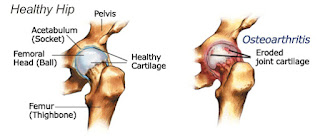
The hip is one of the most vulnerable joints in the body to develop arthritis—particularly osteoarthritis. The lifetime risk for hip osteoarthritis is about 1 in 5 for men and 1 in 4 for women, according to the Centers for Disease Control and Prevention (CDC). How do you know if you're one of the people at risk for hip osteoarthritis? There are several factors that can put you at higher risk. Being older During our lifetimes, our hips carry most of our weight each day, which can be very hard on the cartilage in the joints. Inevitably, joint cartilage degrades more and more as we age, with the potential to become full-blown osteoarthritis after age 45. Most people with hip osteoarthritis problems are in their 60s and 70s. Being overweight The more you weigh, the more pressure is on your joints—and the faster potential degeneration can occur. Unfortunately, joint pain can discourage people from being active, making the accumulation of more pounds likely .   If yo...

Common Running Injuries: Knee Pain

Image
The knees experience pressure equal to approximately 3 times the body's weight when walking and approximately 5 times the body's weight when running. In other words, a person who weighs 150lbs puts about 750lbs of pressure on the knee when landing each running stride. Not surprisingly, the knee is the most frequently injured joint in runners and non-runners alike. Runner's knee: patellofemoral pain syndrome When people say they have "runner's knee," they are typically referring to patellofemoral pain syndrome. "Patella" means kneecap and "femur" means thighbone, so patellofemoral pain is pain that originates between the kneecap and thighbone. The pain is felt at the front of the knee, either under or around the edges of the kneecap. The root of patellofemoral pain can vary and may be difficult to identify. For example, the kneecap may not glide well along the groove in the femur (thighbone), or relatively weak hip muscles may ca...

GETTING READY TO ROCK?

Image
July sees the start of a summer of festivals across the UK and Europe. Ensure you are back pain free for the festivals season this summer. Appealing to young and old, they focus on food and other activities as well as music; something for everyone. If a festival is on your agenda for this summer, it is important to take care of your back so you can maximise the fun. Many festival-goers just go for the day and some will choose to camp overnight but all will be sitting or sleeping on hard surfaces, carrying bags/rucksacks and standing for hours on end.  Tim Hutchful, British Chiropractic Association (BCA) chiropractor, concludes that, although we all want to have fun, it is also important to remain level-headed and switched on to potential risks: “We all love the chance to let our hair down, but this shouldn’t be at the expense of our health. Simple things, such as remaining on the edge of a boisterous crowd or warming up slightly before dancing can help festival-goers to a...

7 Tips to Alleviate Back Pain on Your Road Trips

Image
If you have back pain, riding in the car for an hour or more can be a real challenge. If you have a long trip coming up, consider the following advice and see if it helps you out. 1. Get comfortable immediately Take the time to make sure you're comfortable from the moment you set off on your trip. The smallest irritant in the beginning of your trip can turn into raging pain later. Don't have your wallet, cell phone, or anything else in your back pocket, as that may throw your spine out of alignment. Reduce reaching for the steering wheel, which places more stress on the lumbar spine, neck, shoulder, and wrists. Instead, sit as close to the steering wheel as possible without compromising your safety. Sit up straight with your knees slightly higher than your hips, and keep your chin pulled in so that your head sits straight on top of your spine. Make sure that your back is aligned against the back of your seat. For most people, this means adding extra support to th...

Chiropractic 5x better than NSAIDS Relievers

Image
Ibuprofen WARNING: Regular usage for just ONE week 'increases heart attack risk' EXPERTS have advised people to try and avoid regularly taking ibuprofen after research showed just a week on the painkiller was enough to increase the risk of a heart attack by half. A major new analysis has unmasked the health hazard in the common anti-inflammatory drugs with evidence suggesting the danger exists even after one day. The scientists say the over the counter and prescription pills including ibuprofen, diclofenac, celecoxib and naproxen should now be used with care and at the lowest possible dose. Heart attack risk increases with age and is made worse by raised cholesterol . So the experts say older people especially now need to carefully weigh up the need to take anti-inflammatories with their GP. The latest strong note of caution over the group of medicines known as non-steroidal anti-inflammatory drugs [ NSAIDs ] has been urged following analysis of the health reco...

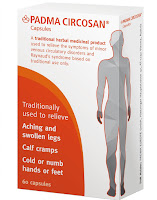
PADMA CIRCOSAN

Image
PADMA CIRCOSAN * Cold hands * Cold feet * Numb hands or numb feet *  * Tingling hands or tingling feet * Aching and swollen legs *  * Calf cramps * Symptoms of Raynaud's syndrome * * Minor venous circulatory disorders * WHAT PADMA CIRCOSAN IS AND WHAT IT IS USED FOR? A traditional herbal medicinal product used to relieve the symptoms of Raynaud’s syndrome and for the relief of symptoms associated with minor venous circulatory disturbances such as tired heavy legs, pain, swelling, and for calf cramps, based on traditional use only. Raynaud’s syndrome happens if the blood supply to the fingers and toes is interrupted in response to changes in temperature or emotional stress. The symptoms are cold hands or feet with numbness or tingling and turning white of toes or fingers. PADMA CIRCOSAN is derived from a formula of Tibetan Medicine. The camphor formula [tibetan: Gabur], on which PADMA CIRCOSAN is based, contains over twenty plants, as well as a mine...