Posts

Showing posts with the label pain relief

Babies need Chiropractic too!

Image
Doctor, This white paper discusses the significance of the October of 2015 study published in the Journal of American Osteopathic Association called “Incidence in Somatic Dysfunction in Healthy Newborns.” An intimate relationship exists between the alignment and movement of the spine, and the function of the central nervous system. Chiropractic is known to help people with a variety of conditions, disorders, and symptoms due to the role of the spine on central nervous system function. But the benefits of chiropractic are not only for those who are suffering. Like a cavity, a small misalignment in the spine can occur before pain or symptoms arise. A popular question about chiropractic amongst healthcare providers and their patients center around the necessity of chiropractic care for babies, children, and adults in the presence or absence of symptoms. This study evaluated one-hundred newborns for the presence of somatic dysfunction, and the findings were remarkable.  ▪ T...
Chiropractic Reduces Depression, Anxiety, and Fatigue in Children

Image
This white paper discusses the significance of the study published in the 2017 Journal of Alternative and Complementary Medicine titled “The Quality of Life of Children Under Chiropractic Care Using PROMIS-25: Results from a Practice-Based Research Network.” Stress is at an all-time high, and it influences more ages in more serious ways than ever before. Studies show that children today experience more stress and anxiety than institutionalized psychiatric patients did in the 1950’s. And these kids eventually turn into drugged-up adults. Nearly one in every four women over the age of 50 take an anti-depressant while over 13% of the entire population take mind-altering anti-psychotic medications. Implementation of strategies and activities that do not come with huge risks and unnecessary harm should be the focus of the medical system. Chiropractic offers a unique perspective and individualized care that can help curb the severity and course of depression and anxiety. This research sh...

5 Risk Factors for Hip Arthritis

Image
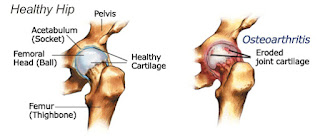
The hip is one of the most vulnerable joints in the body to develop arthritis—particularly osteoarthritis. The lifetime risk for hip osteoarthritis is about 1 in 5 for men and 1 in 4 for women, according to the Centers for Disease Control and Prevention (CDC). How do you know if you're one of the people at risk for hip osteoarthritis? There are several factors that can put you at higher risk. Being older During our lifetimes, our hips carry most of our weight each day, which can be very hard on the cartilage in the joints. Inevitably, joint cartilage degrades more and more as we age, with the potential to become full-blown osteoarthritis after age 45. Most people with hip osteoarthritis problems are in their 60s and 70s. Being overweight The more you weigh, the more pressure is on your joints—and the faster potential degeneration can occur. Unfortunately, joint pain can discourage people from being active, making the accumulation of more pounds likely .   If yo...

How Runners Can Prevent Back Pain

Image
Running is both great for the body and hard on the body. It conditions the muscles and joints and it gives you a good aerobic workout, which keeps your heart healthy and weight within a healthy range. But the relentless impact of your feet against the ground can put you at risk for injuries, particularly in your lower limbs and back. Through a sudden, acute injury—but much more often through repetitive wear and tear—the joints, muscles, and other soft tissues of the back can become damaged or strained. This is especially true for distance runners. The good news is running-related back pain is treatable—many times with a full recovery. Also, you can take steps to prevent back pain from running before it starts. Suiting up A running shoe is not just a running shoe. There are several factors that can help determine what the right shoe for you should be, including: The height of your arches Your pronation style (in other words, how your foot hits the ground and rolls through each ...

How effective is the treatment for migraines? Proof chiropractic works

Image
Seventy-two per cent of migraine sufferers in a clinical trial experienced either ‘substantial’ or ‘noticeable’ improvement after a period of chiropractic treatment, defying historical skepticism of chiropractics by some medical practitioners. The randomised clinical trial was undertaken by Dr Peter Tuchin, a chiropractor for the past 20 years, as part of his recently-completed PhD thesis at Macquarie University. “Around 22 per cent [of patients] had substantial reduction – which means that more than 60 percent of their symptoms reduced during the course of the treatment,” Tuchin says. “What makes this a really strong result is that this was a really chronic group – the average length of time they’d had migraines was 18 years. To get a change of that sort of magnitude in a really chronic group was quite amazing. “Another 50 per cent had quite noticeable improvement. They either found that the frequency of the migraines was less, the length of time they had them was less or tha...

Bulging Disc?? 6 reasons to see a Chiropractor....

Image
A Bulging DISC is when one of your spinal discs is bulging which can cause symptoms such as back pain, leg or arm pain, numbness, tingling and weakness as it influences your nervous system. Patients that have been diagnosed with Bulging DISC may think that there is not much that they can do about it and they are stuck with this major problem, however that is incorrect. With the correct information and the correct treatment, a lot can be done to help you reduce the pain. There are many common misconceptions that people have about Bulging DISC which results them in believing false information, however this post will provide you with the true and correct information to help you: FALSE: Bulging DISC symptoms will ‘disappear’ if you have plenty of rest. TRUTH: If you leave your Bulging DISC untreated then the problem can lead to permanent nerve damage and a life-long pain, therefore if you are suffering from any back pain, buttock pain or leg pain then it is important that...

Don't get stuck with a Frozen Shoulder

Image
A frozen shoulder is a painful condition that reduces the movement of the shoulder causing pain and stiffness. It usually affects people between the age of 40-70 and it is more common for women, especially in postmenopausal women, than men. According to the NHS, studies have shown that approximately 1 in 20 people will suffer from frozen shoulder. Frozen shoulder is also known as adhesive capsulitis or shoulder contracture. It can be frustrating because you may look healthy on the outside but the pain inside is disturbing. These symptoms can disturb your ability to sleep, do normal and simple things such as picking up a spoon and it will make it difficult for you to do a lot of hobbies and exercise. To get the right treatment can be difficult because the cause of frozen shoulder is not always understood. Very often, clinicians will focus all efforts on the shoulder itself, however by following this approach means that trying to find the underlying cause becomes difficult. ...

Common Running Injuries: Knee Pain

Image
The knees experience pressure equal to approximately 3 times the body's weight when walking and approximately 5 times the body's weight when running. In other words, a person who weighs 150lbs puts about 750lbs of pressure on the knee when landing each running stride. Not surprisingly, the knee is the most frequently injured joint in runners and non-runners alike. Runner's knee: patellofemoral pain syndrome When people say they have "runner's knee," they are typically referring to patellofemoral pain syndrome. "Patella" means kneecap and "femur" means thighbone, so patellofemoral pain is pain that originates between the kneecap and thighbone. The pain is felt at the front of the knee, either under or around the edges of the kneecap. The root of patellofemoral pain can vary and may be difficult to identify. For example, the kneecap may not glide well along the groove in the femur (thighbone), or relatively weak hip muscles may ca...

Is Your Headache a PAIN in the Neck?

Image
Research Proves Every Headache is connected to the Neck Dr Sandhu helps many of people overcome  pain and suffering from headaches every day.  Spinal adjustments provide a healthy alternative to the use of drugs or surgery. Many people remain unaware of the alternative approach and benefits available through Chiropractic adjustments. These same people find themselves consuming  dangerous chemicals  to deal with painful symptoms rather than ever addressing the cause of headaches and other ailments. Today’s research reveals that the root cause of most headaches begins with understanding the characteristics simplifies the pursuit of  finding a solution. Brain tissue does not cause a headaches pain. The main culprit s of headache pain stems from changes in  muscle function ,  nerve receptors , and  blood vessels.  Humans never actually  feel  their actual brain. The lack of sensation explains why neurosurgeons operate on brain ti...

Chiropractic and Hayfever – Can it help?

Image
Chiropractic is a form of alternative medicine based on the notion that the relationship between the body’s structure and its function affects health. The term combines Greek words chiro (hand) and praxis (practice) to describe a type of treatment done by hand.  While most people assume chiropractic is all about adjustments to relieve back pain, it does more than that. In fact, chiropractic can help relieve numerous conditions including hay fever. What is hayfever? Hayfever or allergic reaction is a quite common condition that affects about 30% of people worldwide, including up to 10% of the US children under 17 years of age and 7.8% of adults in the country. It’s estimated that medical cost of allergic rhinitis is $3.4 billion due to the cost of prescription medication. On the other hand, in Australia 1 in 5 individuals are affected by this condition. Although the term hay fever is more commonly use, it is a misnomer because hay is not a usual cause of the problem an...

Chiropractic 5x better than NSAIDS Relievers

Image
Ibuprofen WARNING: Regular usage for just ONE week 'increases heart attack risk' EXPERTS have advised people to try and avoid regularly taking ibuprofen after research showed just a week on the painkiller was enough to increase the risk of a heart attack by half. A major new analysis has unmasked the health hazard in the common anti-inflammatory drugs with evidence suggesting the danger exists even after one day. The scientists say the over the counter and prescription pills including ibuprofen, diclofenac, celecoxib and naproxen should now be used with care and at the lowest possible dose. Heart attack risk increases with age and is made worse by raised cholesterol . So the experts say older people especially now need to carefully weigh up the need to take anti-inflammatories with their GP. The latest strong note of caution over the group of medicines known as non-steroidal anti-inflammatory drugs [ NSAIDs ] has been urged following analysis of the health reco...

PADMA CIRCOSAN

Image
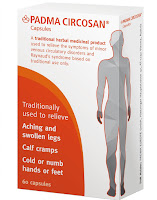
PADMA CIRCOSAN * Cold hands * Cold feet * Numb hands or numb feet *  * Tingling hands or tingling feet * Aching and swollen legs *  * Calf cramps * Symptoms of Raynaud's syndrome * * Minor venous circulatory disorders * WHAT PADMA CIRCOSAN IS AND WHAT IT IS USED FOR? A traditional herbal medicinal product used to relieve the symptoms of Raynaud’s syndrome and for the relief of symptoms associated with minor venous circulatory disturbances such as tired heavy legs, pain, swelling, and for calf cramps, based on traditional use only. Raynaud’s syndrome happens if the blood supply to the fingers and toes is interrupted in response to changes in temperature or emotional stress. The symptoms are cold hands or feet with numbness or tingling and turning white of toes or fingers. PADMA CIRCOSAN is derived from a formula of Tibetan Medicine. The camphor formula [tibetan: Gabur], on which PADMA CIRCOSAN is based, contains over twenty plants, as well as a mine...

11 Ways to Indulge Your Spine

Image
Let’s face it, most of us don’t take very good care of our spines. This lack of care can lead to physical discomfort and make us susceptible to future injuries and complications. Do your spine, and your overall health a favor and take the time to treat your spine to a few of these 11 indulgences: 1. Make exercise a lifestyle Exercise is essential when it comes to maintaining a healthy spine—and it can also aid in the rehabilitation of your injured spine. You don’t need to be an expert in physical fitness to indulge your spine with regular exercise. A simple exercise program that focuses on stretching and strengthening the back, hamstrings, and abdominal muscles can go a long way toward distributing nutrients into your spinal discs and soft tissues, accelerating your healing process, and keeping your discs, muscles, ligaments, and joints healthy. 2. Engage your mind If you suffer from chronic pain or discomfort associated with your spine, take the time to engage in mindful...