Posts

Showing posts with the label orthotics pain relief

Autism and Chiropractic

Image
Doctor, This white paper discusses the significance of the study published in the 2013 Public Library of Science One Journal titled “Investigating the Autonomic Nervous System Response to Anxiety in Children with Autism Spectrum Disorders.” Recent statistics reveal that one out of every sixty-eight children suffer with autism spectrum disorder (ASD). ASD is defined as a complex developmental disorder that can cause problems with thinking, feeling, language and the ability to relate to others. It is a neurological disorder, which affects the function of the brain. Science and research behind the neurological influence of a chiropractic adjustment explains why and how children and adults with autism can be helped. This research looked at autonomic nervous system function in children with autism The objectives of this study were to:  ▪ Examine whether anxiety causes significant measurable changes in indicators of the autonomic nervous system in an autism spectrum disorder(ASD...
5 Risk Factors for Hip Arthritis

Image
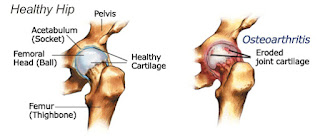
The hip is one of the most vulnerable joints in the body to develop arthritis—particularly osteoarthritis. The lifetime risk for hip osteoarthritis is about 1 in 5 for men and 1 in 4 for women, according to the Centers for Disease Control and Prevention (CDC). How do you know if you're one of the people at risk for hip osteoarthritis? There are several factors that can put you at higher risk. Being older During our lifetimes, our hips carry most of our weight each day, which can be very hard on the cartilage in the joints. Inevitably, joint cartilage degrades more and more as we age, with the potential to become full-blown osteoarthritis after age 45. Most people with hip osteoarthritis problems are in their 60s and 70s. Being overweight The more you weigh, the more pressure is on your joints—and the faster potential degeneration can occur. Unfortunately, joint pain can discourage people from being active, making the accumulation of more pounds likely .   If yo...

HOW CROOKED ARE US BRITS?

Image
Keep an eye on your spinal health News from the British Chiropractic Association (BCA) has revealed that over half the UK population is crooked. Don’t fret, we’re not accusing you of fiddling expenses or cooking any books, by crooked we mean out of alignment with poor posture and bad backs. The BCA say that in a survey of 5000 Brits the incidence of bad posture has risen to 56% of the UK population, up from 38%. Alarmed at the news we at  Men’s Health  sat up straight and phoned Tim Hutchful from The British Chiropractic Association, to find out how we can avoid joining the crooked crowd. Here’s his advice. Give your posture a sporting chance “Any unaccustomed exercise can put you at risk of back pain,” says Hutchful. You might only play a relaxed low-risk sport once a week but you still need to prepare yourself sufficiently – mentally and physically. “Warming up and warming down is essential to ensure that your joints and muscles don’t get a shock. Strong ab...

Why Tradesmen need TLC too!

Image
Do you suffer from work-related chronic pain? Does pain you experience affect you work? If you answered “YES” to both questions, then you belong to the big group of tradesmen who suffer from chronic pain. In fact, tradesmen account for the highest number of injuries, musculoskeletal conditions and other health risks of any other profession. Nearly a quarter of all plumbers, builders, roofers and other tradesmen experience back pain, sciatica, muscle stress and strains from lifting equipment, bending over all the time, tripping, slipping, and falling due to managing equipment.  What causes chronic pain? In some cases, chronic pain is associated with specific injury from the past. On the other hand, there are also people who suffer from chronic pain but didn’t experience any injuries at work. It’s because chronic pain is usually result of combination of different factors. It can also be related to conditions such as: Arthritis Lower back pain Nerve damage Neck Pain Dis...

Headaches

Image
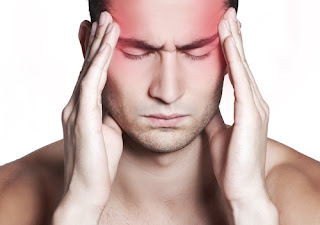
Do you suffer from headaches or migraines? For those of you who have visited us here, you would recognise this question, regardless of the reason you came in to see us. It has been estimated that 10 million people in the UK suffer from headaches on a regular basis (nhs.uk). So unsurprisingly here at the clinic we see a lot of patients suffering headaches, whether it being their main complaint or something that we have uncovered during the case history. Quite often they can describe these as ‘normal’ headaches.  There is no such thing as a ‘normal’ headache. Some of you may ask, ‘What do headaches have to do with your spine?’ Well there are hundreds of types of headaches but some of the most common are tension headaches, migraines and cervicogenic headaches, all of which can be influenced by spinal health and posture. Tension Headaches Those who suffer with tension headaches, often describe a feeling of band like pressure across the forehead and temples. They can also des...

Pulled Back Muscle and Lower Back Strain

Image
The majority of episodes of acute lower back pain are caused by damage to the muscles and/or ligaments in the low back. While a muscle strain doesn’t sound like a serious injury, the resulting lower back pain can be surprisingly severe and is the cause of many emergency room visits each year. Lower Back Strain Low back pain from muscle strain can be surprisingly severe. There are two common types of lower back strain: A muscle strain happens when the muscle is over-stretched or torn, resulting in damage to the muscle fibers (also called a pulled muscle). A lumbar sprain happens when ligaments are stretched too far or torn. Ligaments are very tough, fibrous connecting tissues that connect bones together. For practical purposes, it doesn’t matter if it is a muscle strain or a ligament sprain that is causing the pain, since the treatment and prognosis for both are the same. When the muscles or ligaments in the low back are strained or torn, the area around the muscles wil...

3 Simple Items That Can Help Ease Your Chronic Sciatica

Image
If you suffer from chronic sciatica, you are intimately familiar with the annoyance of constant flare-ups of symptoms like leg pain or numbness in your foot. Sciatica treatment plans typically need to be tailored to the medical issue causing your symptoms. Of course, no single remedy works for everyone—but these 3 simple items may help you find relief from your pesky symptoms: 1. Cold Packs Regardless of how long you have suffered from sciatica symptoms, they can still strike with little to no warning. The application of cold therapy can provide quick relief by numbing your tissues and reducing inflammation. However, if you’re in your car—or perhaps enjoying a day out with friends—you may not have quick access to ice cubes or a frozen gel pack. This is why it is a good idea to purchase disposable ice packs. These packs are activated by a chemical reaction, so they can be carried with you anywhere. Furthermore, they are small enough to fit in your purse or glove compartmen...

To stand tall or not to stand tall?

Image
To stand tall or not to stand tall? In my experience, so many people take their posture for granted, not realising how much it can impact there lives. I grew up walking around my grandmothers living room with a book or bottle balanced on my head. 'Keep your shoulders back, look forward, stand tall' she used to say. I found this highly entertaining and saw it more of a game than something that would help me later in life. On a daily basis, I see people that are in pain brought on by bad posture, sometimes working too long at a desk, sitting in a car for a long duration, lifting something in the wrong way or carrying a baby on one side. Granted, sometimes these things are unavoidable but most of the time these very bad habits can easily be changed. Too often I'll be walking through a supermarket and see someone hunched over pushing there trolley, more often than the older generation. This is likely to be caused by a lifetime of poor posture. Not only will...

Spring Cleaning!

Image
It’s that time of year! People dust the corners and break out the ladder for spring cleaning.  But many people are unaware of the potential risk of injury that may occur as the result of spring cleaning. You need to know that thousands of injuries occur every year with the use of simple gardening tools. Even more injuries occur as the result of handling a ladder improperly. So the key to avoid spring cleaning injuries is to know your LIMITS. It’s easy and tempting to take on more spring cleaning chores than your body can accommodate because you don’t feel the ‘pain’ immediately. So be sure to take breaks throughout. Another important idea is to stretch before spring cleaning.  Yes, S-T-R-E-T-C-H. A little stretching can go a long way to prevent injuring your back and neck. Here are some simple rules I want you to follow so you don’t injure your back. “Five Rules To Avoid Spring Cleaning Injuries… Inside Your Home.” Rule 1    Prepar...

Scoliosis

Image
Scoliosis: What You Need to Know Scoliosis (pronounced sko-lee-o-sis) is a three-dimensional deformity that occurs when the spine becomes abnormally rotated and curved sideways. Most often this deformity has no known cause, in which case it is called idiopathic scoliosis. Common Early Signs of Scoliosis Clothes fit awkwardly or hang unevenly.  A parent, friend, or even the person with scoliosis might notice that a shirt or blouse appears uneven, which could be cause for further investigation. Sideways curvature observed while in bathing suit or changing.  For instance, a parent could first notice the sideways curvature in an adolescent’s back while at the pool or beach. Oftentimes scoliosis is first suspected when someone notices something slightly off and comments. Some examples could include: Even if a newly discovered asymmetry appears minor, it should be checked by a doctor because scoliosis is easier to treat when caught early. “Can a chiropractor fix ...

Proof that chiropractic treatment helps migraine sufferers

Image
Proof that chiropractic treatment helps migraine sufferers Seventy-two per cent of migraine sufferers in a clinical trial experienced either ‘substantial’ or ‘noticeable’ improvement after a period of chiropractic treatment, defying historical skepticism of chiropractics by some medical practitioners. The randomised clinical trial was undertaken by Dr Peter Tuchin, a chiropractor for the past 20 years, as part of his recently-completed PhD thesis at  Macquarie University . “Around 22 per cent [of patients] had substantial reduction – which means that more than 60 percent of their symptoms reduced during the course of the treatment,” Tuchin says. “What makes this a really strong result is that this was a really chronic group – the average length of time they’d had migraines was 18 years. To get a change of that sort of magnitude in a really chronic group was quite amazing. RELATED STORIES Penicillin allergy testing: an interview with Dr. Eric Macy Headache and mig...