Posts

Showing posts with the label heel pain

Fibromyalgia and the role of Chiropractic

Image
This white paper discusses the significance of the 2014 study published in the Journal of Rehabilitation Research and Practice called “Effects of poster anterior thoracic mobilization on heart rate variability and pain in woman with fibromyalgia”. The amount of fibromyalgia sufferers increases steadily each year. A disorder characterized by widespread musculoskeletal pain accompanied by fatigue, sleep, memory and mood issues, fibromyalgia inhibits the ability to live a normal life. No cure currently exists for the disease, but many doctors and researchers spend time, money, and resources in search for the antidote. In 2014, a study evaluated changes that occurred in the health of fibromyalgia sufferers after receiving spinal adjustments. The findings were remarkable and as follows: ·        The purpose of the study was to evaluate the effects of one session of spinal adjusted care on both autonomic modulation and pain in women with fibromyal...

Is Your Headache a PAIN in the Neck?

Image
Research Proves Every Headache is connected to the Neck Dr Sandhu helps many of people overcome  pain and suffering from headaches every day.  Spinal adjustments provide a healthy alternative to the use of drugs or surgery. Many people remain unaware of the alternative approach and benefits available through Chiropractic adjustments. These same people find themselves consuming  dangerous chemicals  to deal with painful symptoms rather than ever addressing the cause of headaches and other ailments. Today’s research reveals that the root cause of most headaches begins with understanding the characteristics simplifies the pursuit of  finding a solution. Brain tissue does not cause a headaches pain. The main culprit s of headache pain stems from changes in  muscle function ,  nerve receptors , and  blood vessels.  Humans never actually  feel  their actual brain. The lack of sensation explains why neurosurgeons operate on brain ti...

Watch Your Back—and Enjoy the Summer

Image
Summer is a time for swimming, travel, and get-togethers with family and friends. The last thing you want is for your back pain to throw a wrench into everything. Try these 6 suggestions to enjoy the great outdoors without the hassles: 1. Warm up first.  If you haven't been active lately, it's best to start gradually. Do some slow stretches or take a short walk before joining that basketball game or digging up those overgrown bushes you've been meaning to get to.  2. Make a splash.  Water's buoyancy is a boon for your back. It not only eases lower back compression, it allows greater range of motion without the risk of falling. Warm water has the added benefit of relieving stiffness and relaxing tight muscles, which can aggravate back pain. 3. Skip the flip-flops.  Flip-flops and flats offer little support, putting stress on your back. Sandals can be a better way to keep cool. Look for styles that hold your feet securely—no slipping from side to s...

7 Tips to Alleviate Back Pain on Your Road Trips

Image
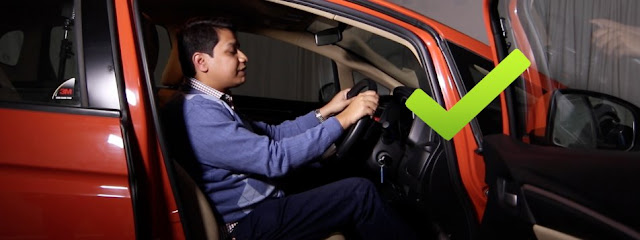
If you have back pain, riding in the car for an hour or more can be a real challenge. If you have a long trip coming up, consider the following advice and see if it helps you out. 1. Get comfortable immediately Take the time to make sure you're comfortable from the moment you set off on your trip. The smallest irritant in the beginning of your trip can turn into raging pain later. Don't have your wallet, cell phone, or anything else in your back pocket, as that may throw your spine out of alignment. Reduce reaching for the steering wheel, which places more stress on the lumbar spine, neck, shoulder, and wrists. Instead, sit as close to the steering wheel as possible without compromising your safety. Sit up straight with your knees slightly higher than your hips, and keep your chin pulled in so that your head sits straight on top of your spine. Make sure that your back is aligned against the back of your seat. For most people, this means adding extra support to th...

Did you get hurt during your workout? - Ice v's Heat

Image
Did you get hurt during your workout?  It’s time to grab the heating pad… or the ice pack… or both—who even knows! There’s a lot of confusion when it comes to using heat or cold to help treat common exercise injuries like strains, sprains, pulled muscles, shin splits, knee injuries and tenderness. Let’s put an end to it once and for all! Here’s your temperature care breakdown, so you know when it’s time to sing a song of fire or one of ice. Ice, Ice, Baby As a general rule, always choose ice for injuries and inflammation. Cold restricts blood flow and reduces inflammation and swelling. Whenever there’s bleeding in underlying tissue—think sprains, strains or bruising—ice treatment is the way to go. You can use cold therapy in two ways: immediate or rehabilitation. Immediate treatment: helps prevent the injured area from becoming stiff by reducing tissue fluid. Rehabilitation: aims to restore normal function to an affected area by reducing pain and spasms, ...

Chiropractic 5x better than NSAIDS Relievers

Image
Ibuprofen WARNING: Regular usage for just ONE week 'increases heart attack risk' EXPERTS have advised people to try and avoid regularly taking ibuprofen after research showed just a week on the painkiller was enough to increase the risk of a heart attack by half. A major new analysis has unmasked the health hazard in the common anti-inflammatory drugs with evidence suggesting the danger exists even after one day. The scientists say the over the counter and prescription pills including ibuprofen, diclofenac, celecoxib and naproxen should now be used with care and at the lowest possible dose. Heart attack risk increases with age and is made worse by raised cholesterol . So the experts say older people especially now need to carefully weigh up the need to take anti-inflammatories with their GP. The latest strong note of caution over the group of medicines known as non-steroidal anti-inflammatory drugs [ NSAIDs ] has been urged following analysis of the health reco...

Pulled Back Muscle and Lower Back Strain

Image
The majority of episodes of acute lower back pain are caused by damage to the muscles and/or ligaments in the low back. While a muscle strain doesn’t sound like a serious injury, the resulting lower back pain can be surprisingly severe and is the cause of many emergency room visits each year. Lower Back Strain Low back pain from muscle strain can be surprisingly severe. There are two common types of lower back strain: A muscle strain happens when the muscle is over-stretched or torn, resulting in damage to the muscle fibers (also called a pulled muscle). A lumbar sprain happens when ligaments are stretched too far or torn. Ligaments are very tough, fibrous connecting tissues that connect bones together. For practical purposes, it doesn’t matter if it is a muscle strain or a ligament sprain that is causing the pain, since the treatment and prognosis for both are the same. When the muscles or ligaments in the low back are strained or torn, the area around the muscles wil...

3 Simple Items That Can Help Ease Your Chronic Sciatica

Image
If you suffer from chronic sciatica, you are intimately familiar with the annoyance of constant flare-ups of symptoms like leg pain or numbness in your foot. Sciatica treatment plans typically need to be tailored to the medical issue causing your symptoms. Of course, no single remedy works for everyone—but these 3 simple items may help you find relief from your pesky symptoms: 1. Cold Packs Regardless of how long you have suffered from sciatica symptoms, they can still strike with little to no warning. The application of cold therapy can provide quick relief by numbing your tissues and reducing inflammation. However, if you’re in your car—or perhaps enjoying a day out with friends—you may not have quick access to ice cubes or a frozen gel pack. This is why it is a good idea to purchase disposable ice packs. These packs are activated by a chemical reaction, so they can be carried with you anywhere. Furthermore, they are small enough to fit in your purse or glove compartmen...
Image
Could driving be causing you back or neck pain? Travelling to work, shopping, ferrying the children around, getting to meetings, visiting friends and relatives; for many people driving is a routine activity, an essential part of daily life. And it’s a very comfortable and convenient way of travelling, especially in the winter, when the cold, wet weather sets in. But all this time spent sitting in a car seat is bad news for our backs because it causes 50% more pressure on the lumbar discs compared to standing up¹. In the interest of safety car manufacturers have adapted car seats, so that our knees are now higher than our hips. Unfortunately, this is a far from ideal sitting position, compromising what we (chiropractors) would recommend as ‘good posture’. On top of this, when we drive our legs move asymmetrically to use the pedals, causing us to twist and turn in order to be able to check what’s going on around us, and to stretch in order to change gears and steer the wheel....

Get fit without getting injured

Image
Get fit without getting injured The gym; an intimidating testosterone-filled place full of bodybuilders and fitness freaks in lycra. For some, this can already be the ‘nope’ point. I mean, who wants to rock up to a building full of sweaty gym rats?! Once you have gotten over this hurdle, and accepted that your health and fitness comes first, then you can focus on your own mission and get down to work. First, depending on your goals, it’s always a good idea to record your progress in a notebook or phone app. Shedding that extra pound or maybe even lifting an extra rep all adds up in the long run. Evidence of where you started, and proof of your progress, can keep you going through the tough times. So, you’ve got your mind on a goal, your target destination. You’re underway and loving the new body you’re getting. But how do you keep progressing whilst limiting injury? Did you know that the most common gym injury is caused by bad form (wrong or poor technique). Fo...

Spring Cleaning!

Image
It’s that time of year! People dust the corners and break out the ladder for spring cleaning.  But many people are unaware of the potential risk of injury that may occur as the result of spring cleaning. You need to know that thousands of injuries occur every year with the use of simple gardening tools. Even more injuries occur as the result of handling a ladder improperly. So the key to avoid spring cleaning injuries is to know your LIMITS. It’s easy and tempting to take on more spring cleaning chores than your body can accommodate because you don’t feel the ‘pain’ immediately. So be sure to take breaks throughout. Another important idea is to stretch before spring cleaning.  Yes, S-T-R-E-T-C-H. A little stretching can go a long way to prevent injuring your back and neck. Here are some simple rules I want you to follow so you don’t injure your back. “Five Rules To Avoid Spring Cleaning Injuries… Inside Your Home.” Rule 1    Prepar...

Chiropractic is good way to “retrain your brain” to use correct posture and correct bio-mechanics.

Image
You may be sitting, standing, walking, or even running in a way that puts uneven stress on your body, which over time, results in pain. Also, poor posture can cause soft tissue damage, another cause of pain. By correcting your posture and bio-mechanics, we greatly reduce the chance of pain returning in the future!... You only have to look at a spine to see how its various curves may affect the pressure areas on discs, facette joints, spinal nerves, ligaments and muscles. Correct and incorrect posture can alter those curves and result in different stresses by changing the center of gravity. Posture and biomechanical imbalances Posture starts at the head and works its way down or on the other hand starts at the feet and works its way up. Even in books looking at the progress of homo sapiens (homo erectus) in evolution, man is portrayed as somewhat hunchbacked. The head protrudes forward on the neck, the shoulders are rounded, the stomach protrudes forward with a sway back, and...